


Summer Is Coming: How to Keep Your Kids Engaged, Growing, and Off Screens All Summer Long
By David W. | Mission Ready Father
The best summer activities for kids aren’t one-size-fits-all — they’re matched to who your child actually is.
It happens every year like clockwork.
The last day of school arrives. Backpacks get dropped by the door. And within 24 hours — sometimes less — you hear the words no parent wants to hear during summer break:
“I’m bored.”
And then, almost immediately after: “Can I have my phone?”
If you’re a working parent trying to keep your kids productively engaged while managing everything else life throws at you during the summer — this post is for you. Not a one-size-fits-all activity list. Not a generic “limit screen time” lecture you’ve heard a thousand times. But a real, experience-based guide to keeping kids genuinely engaged this summer — matched to who your child actually is.
Because here’s what I’ve learned as a father: the key to a productive summer isn’t finding the right activity. It’s finding the right activity for the right kid. Those are two very different things.
The Best Summer Activities for Kids Start With Knowing Your Child
Before we get into specific recommendations — let’s talk about something most summer activity guides skip entirely.
Every child has a natural engagement style. Some kids come alive with a book in their hands. Others need to build something, take something apart, or create something from scratch. Some thrive outdoors. Others are happiest with a pencil and a blank page. Most kids are some combination of all of the above — and figuring out which combination unlocks your specific child is the foundation of a summer that actually works.
I’ve organized this guide around four child personality types — The Reader, The Builder, The Artist, and The Explorer. Most kids will see themselves in more than one. Use these categories as a starting point, not a box.
And at the end — we’ll talk about something even more important than keeping kids entertained: keeping them responsible.
📚 The Reader
For the child who disappears into a book and surfaces three hours later having forgotten to eat lunch.
I know this child well. As a father I’ve watched firsthand what happens when a child finds a series they truly connect with — and it’s one of the most rewarding experiences of parenthood.
In the younger years The Warriors series by Erin Hunter — a sprawling fantasy epic about clans of wild cats — has a remarkable ability to pull young readers in with its world-building, moral complexity, and seemingly endless supply of books to devour. If your child loves fantasy — this series is a literary rabbit hole. Once they fall in, they have months of reading ahead of them across multiple arcs and dozens of books.
For older readers the taste often evolves toward more complex territory. The Shatter Me series by Tahereh Mafi — a dystopian, military-driven series with strong themes of power, identity, and resilience — is one that resonates deeply with many teen readers. It’s a series with some heavier themes worth being aware of as a parent — and the right approach is to stay engaged with what your teen reads, maintain open conversations about the content, and trust your knowledge of their maturity level.
That last point is worth saying directly: not all kids are at the same maturity level based on age alone. A book that’s perfect for one teenager may not be right for another. You know your child better than any age rating does. Use recommendations as a starting point and make the call that’s right for your kid.
For the younger reader — ages 8 to 12:
The Warriors series is an excellent starting point for fantasy lovers. For readers who prefer adventure, the Percy Jackson series by Rick Riordan remains one of the most consistently engaging series for this age group — mythology, humor, and genuine heart woven into every book.
For the teen reader — ages 13 and up:
If your teenager gravitates toward dystopian fiction, strong female protagonists, or stories with political and social themes — The Shatter Me series is worth exploring with the caveat above about knowing your child’s maturity level.
The Reading Challenge Approach
One of the best ways to keep a reader engaged all summer is to turn reading into a structured but fun challenge. Create a summer reading list together — let them have input on the selections — and set a goal for the summer. Scholastic’s Summer Reading Program is a free resource worth bookmarking that helps kids track their reading progress all summer long. Tie a reward to completion. A new book from their wishlist. A special outing. Something that means something to them specifically.

👉 The Warriors Series Book 1 — Into the Wild by Erin Hunter on Amazon

👉 Percy Jackson and the Lightning Thief by Rick Riordan on Amazon

👉 Shatter Me by Tahereh Mafi on Amazon
🔨 The Builder
For the child who sees a box of parts and immediately needs to know what they become.
I know this child well too — as a father I’ve seen firsthand what happens when a builder finds the right project.
A KiwiCo box arrived at our door not long ago. Before it was fully inside the house the excitement was already building. The project inside was a crane — but not just any crane. This one was operated by tubes filled with water to replicate a hydraulic system. The engineering concept alone was worth the price of the subscription.
What happened next is why I recommend KiwiCo without hesitation to every parent of a builder.
The project created a natural opening to sit alongside and help fine-tune a few of the more precise elements — watching that expression when the hydraulic system actually worked and the crane lifted its first load. That moment is one of those parenting moments you tuck away and keep.
But here’s what impressed me most: the project didn’t get finished and forgotten. It stayed out for the following week — operated repeatedly, shown to anyone and everyone who would look. That’s the mark of a genuinely well-designed project — it has replay value beyond the build itself.
A previous KiwiCo project was a remote control car — which had significant replay value of its own, although our dog had some strong opinions about being chased around the house by it. For the record — he was never in any real danger. The car never actually caught him. The look on his face suggested he wasn’t entirely convinced of this.
Why KiwiCo Works for Builders
KiwiCo offers several subscription lines matched to different ages and interests:
- Koala Crate — ages 3–4, early learning through play
- Kiwi Crate — ages 5–8, hands-on building and creative projects
- Tinker Crate — ages 9–16, more complex engineering and STEM projects
- Eureka Crate — ages 14+, advanced science and engineering
The Tinker Crate line for ages 9–16 is where the complexity level hits the sweet spot for most elementary and middle school builders — challenging enough to be genuinely engaging, achievable enough to complete with a real sense of accomplishment.
A KiwiCo subscription also solves one of the most common summer parenting problems – the question of what to do today. When a new box arrives that question answers itself. Checkout one of the suggestions below and see how your ‘Builder’ enjoys before committing to a subscription.

👉 KiwiCo Pixel Art Kit for Kids Ages 5-8

👉 KiwiCo Levitating Lantern – STEM Project – for Kids Ages 9+
🎨 The Artist
For the child who is happiest with something to create and the freedom to create it.
In my experience as a father, the Builder and the Artist are often the same child — which makes complete sense. The same curiosity that drives a kid to build something from parts also drives them to create something from a blank page. Both are acts of making something from nothing.
Drawing is one of the most accessible creative outlets available to kids — it requires minimal equipment, can be done anywhere, and scales beautifully from casual doodling to genuine skill development. The challenge for most kids is getting past the early frustration of their output not matching their vision. The right instructional resource makes an enormous difference here.
One that has worked well and comes highly recommended for kids in the 8–12 age range is the 30 Days Learning to Draw Like an Artist guide — a step-by-step beginner drawing book that builds skills progressively over 30 days. The structured approach is key — rather than staring at a blank page wondering what to draw, kids follow a daily lesson that builds on the previous one. By the end of 30 days the improvement is visible and motivating.
For a child who loves to draw, a well-stocked art supply set alongside a structured drawing guide turns summer afternoons into genuine skill development. And unlike screen time — which tends to leave kids feeling flat and restless — creative work tends to leave them feeling accomplished and energized.
Summer Art Challenge Idea
Create a summer sketchbook challenge — one drawing per day for the summer. By the time school starts your child has a sketchbook full of their own work that documents their growth over three months. Frame one or two of the best pieces. The pride that comes from that is something they carry well beyond the summer.
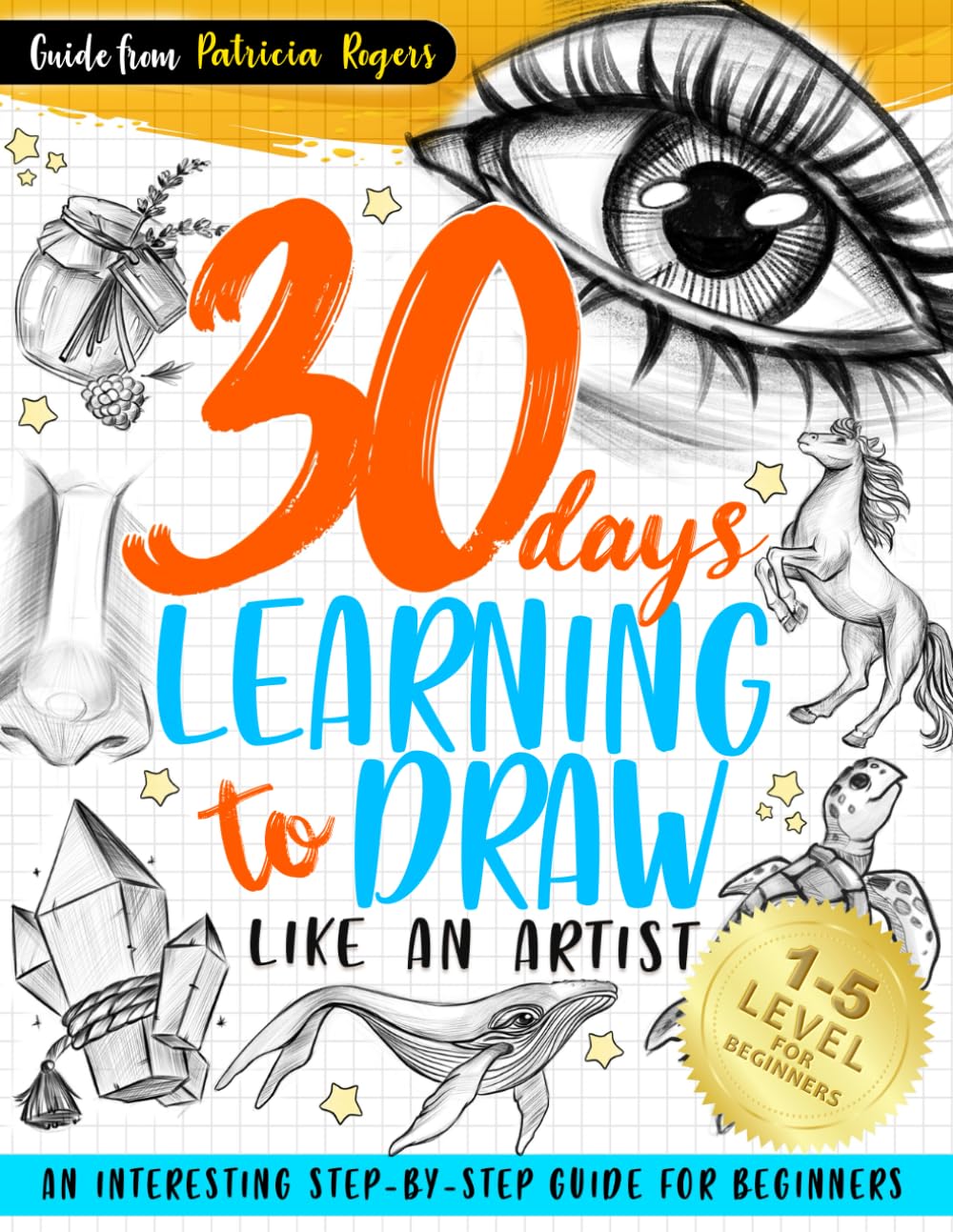
👉 30 Days Learning to Draw Like an Artist on Amazon

👉 Art Supply Starter Set for Kids on Amazon

👉 Sketchbook for Kids on Amazon
🌿 The Explorer
For the child who needs to be outside, moving, discovering, and experiencing the world beyond four walls.
Not every child thrives in structured indoor activities — and that’s completely fine. Some kids need dirt under their fingernails and open sky above them to feel fully alive during summer.
For the outdoor explorer consider:
Gardening — giving a child their own small garden plot to tend over the summer teaches patience, responsibility, and the profound satisfaction of growing something from a seed. Start simple — tomatoes, sunflowers, or herbs are forgiving and produce results visible enough to keep a child engaged.
Nature journaling — a blank journal and a set of colored pencils taken outside becomes a nature observation log. Kids draw what they see, write what they notice, and develop a habit of paying attention to the world around them that serves them far beyond childhood.
Outdoor science kits — bug catching sets, rock and mineral collections, and backyard science experiment kits turn the backyard into a laboratory.

👉 Kids Gardening Root Viewer Kit on Amazon

👉 Nature Journal for Kids on Amazon

👉 National Geographic Earth Science Kit on Amazon
👨👧👦 The Most Important Thing You Can Do This Summer – Show Up
Activities, projects, books, and chore charts all matter. But none of them matter as much as this:
Be deliberately present with your kids this summer.
I know what you’re thinking — you’re a working parent. You have meetings, deadlines, laundry, groceries, and approximately forty-seven other things competing for your attention on any given day. Summer doesn’t pause the responsibilities of adult life. If anything it adds to them.
That’s exactly why presence has to be deliberate. Because if you wait for a natural opening — a moment when everything else is handled and your full attention is available — that moment rarely comes. You have to create it.
It doesn’t have to be elaborate. It doesn’t require a planned outing or a blocked afternoon. Some of the most meaningful moments of connection happen in small, ordinary exchanges that only feel small until you look back on them years later.
Ask questions — even when you already know the answer.
If your child is reading a book they love, ask about it tonight. Not “how’s your book” — but a real question. “What do you think is going to happen next?” “Which character do you relate to most and why?” “If you could change one thing about the story so far what would it be?”
These questions do something powerful. They put your child at the center of the conversation. They signal that what they think matters — that their perspective is worth asking for and worth listening to. That signal is something children carry with them long after the conversation ends.
The same applies to every activity they’re engaged in. Ask your builder how the project works — even if you already understand it. Let them explain it to you. Watch their face while they do. The pride of teaching a parent something is one of the most confidence-building experiences a child can have.
Ask your artist what inspired the piece they just finished. Ask your explorer what was the most interesting thing they discovered today. Ask the question and then — this is the critical part — actually listen to the answer without reaching for your phone.
Carve out family time and protect it.
One or two evenings a week of intentional family time makes a measurable difference in connection over a summer. It doesn’t have to be long. A family board game. A card game after dinner. A walk around the neighborhood where phones stay home. Twenty minutes of something you do together that belongs only to that moment.
What you focus on grows. Focus on your kids this summer — even imperfectly, even inconsistently, even in the small moments between everything else — and watch what grows in return.
Putting It All Together
A productive summer doesn’t require a packed schedule, an expensive camp, or a perfectly executed plan. It requires knowing your child, meeting them where they are, and showing up for them with enough intention to make the season mean something.
Find the series that turns your reader into someone who forgets to eat lunch. Find the project that makes your builder desperate to open the box the moment it arrives. Give your artist a sketchbook and thirty days of guided challenges. Get your explorer outside with dirt under their fingernails and something to discover.
And in the margins of all of it – ask the questions. Play the games. Take the walk. Be present in the small moments that don’t feel important until they become the ones your kids remember.
That’s the mission ready summer.
— David W.
Coming next — Summer Home Maintenance: The essential tasks every homeowner should tackle before summer hits full stride — including the five highest-impact items that protect your home, your wallet, and your family’s comfort all season long.
Mission Ready Father participates in affiliate marketing programs including Amazon Associates and others. If you purchase through links in this post I may earn a small commission at no extra cost to you. I only recommend products I personally use or would confidently recommend to another parent.
Filed under: Parenting | Raising Capable Kids | Family | Summer Activities | Kids
Discover more from The Mission Ready Father
Subscribe to get the latest posts sent to your email.


